Get Off The Apps: Why Real-World Practice Is Essential for Language Learning
I’m literally wearing this exact outfit.
Now, listen. No one is telling you to clip Duo’s wings. If anything, that bird deserves a medal for getting millions of people excited about learning another language.
Duolingo, Pimsleur, Babbel, Rosetta Stone, Memrise, Lingo Legend—the list goes on. I’ve tested most of them at one point or another, and eventually they all start to feel like a chore. While maintaining a streak is a great way to build consistency, it can also lock you into practicing language that never quite leaves the app. And I promise you—talking to Lily on Duolingo Max is not the same as trying to order in Spanish at your local taquería.
Why Language Apps Aren’t Enough to Build Fluency
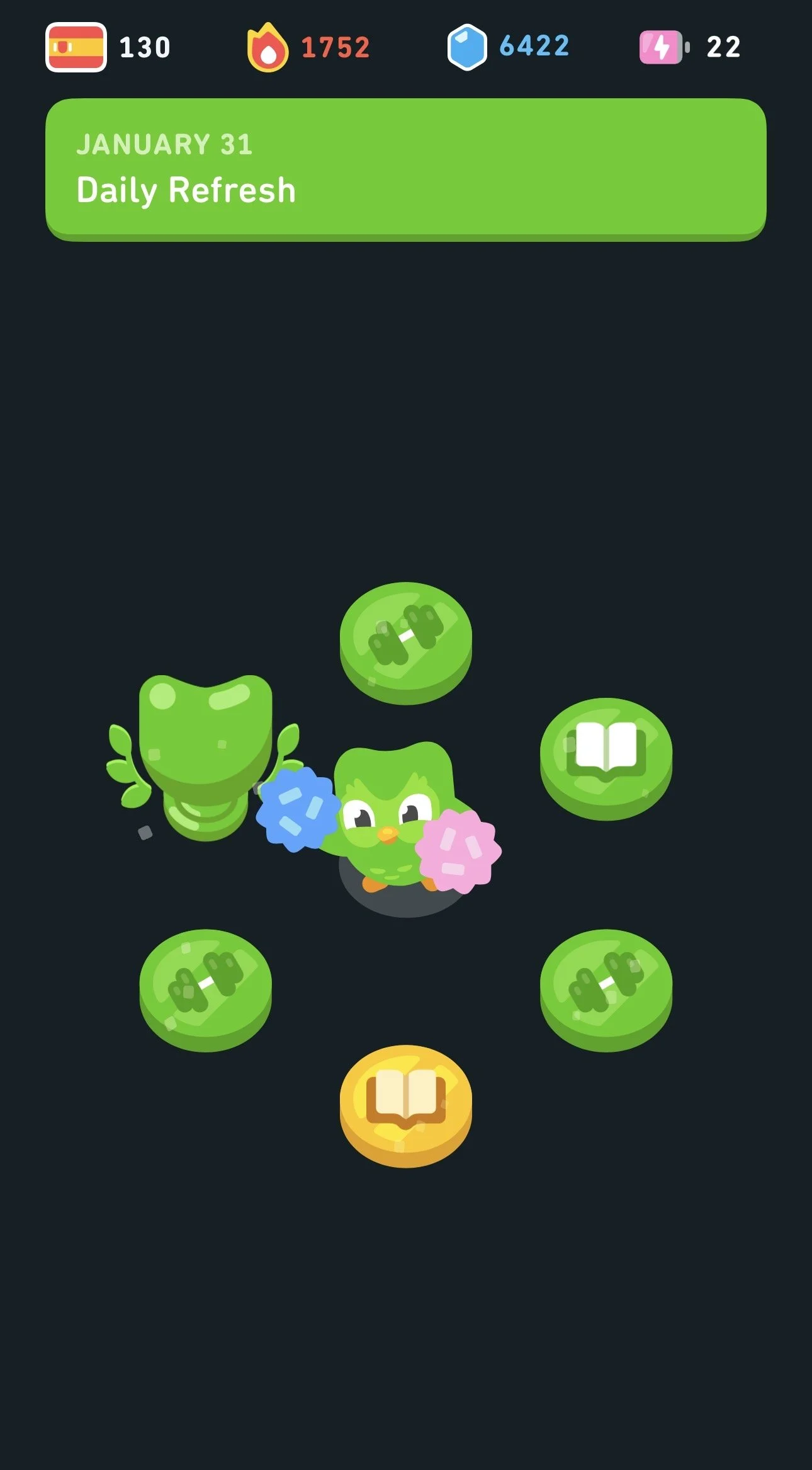
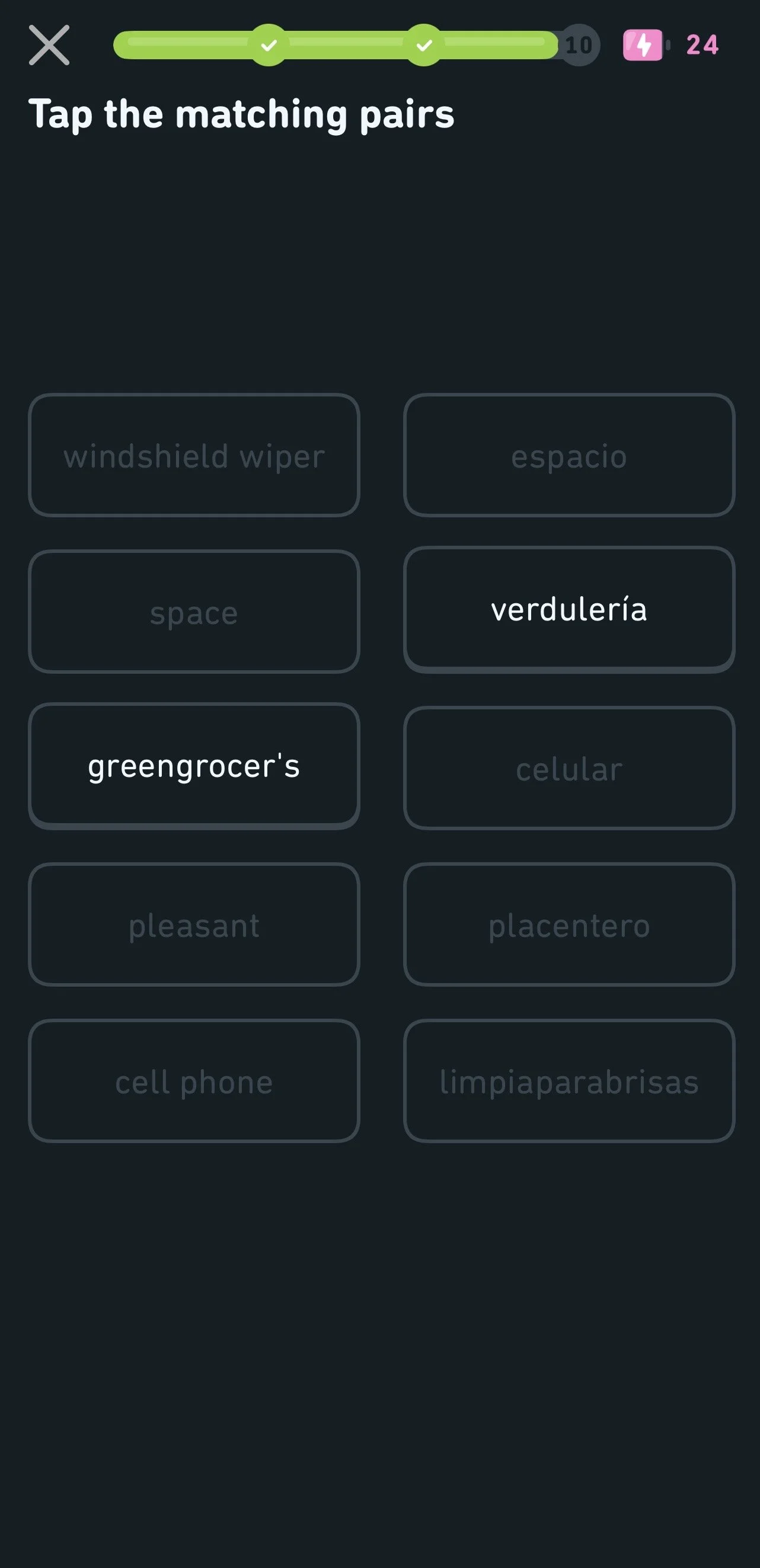
That said, I still use Duolingo para calentar los motores (to warm up the engines). As of this moment, I have a 1,935-day streak. I’m an early riser—up at 4 a.m. for the gym—so I usually knock out my Daily Refresh during my treadmill cool-down. Any phrases or words I don’t understand, or want more explanation for, I screenshot and send to my Colombian friend for real-world context. More often than not, he’ll give me an alternative way to say the same thing—and I usually like his version better. Not because Duolingo is wrong, but because I know what I’m learning is something a real person would actually say.
Real Conversations Are Where lanGuage Learning Actually Happens
Apps are just a part of our lives, so it’d be unrealistic to tell you to go completely app-free—especially when some apps genuinely offer more value than others. If there’s no amigo colombiano en su vida, or any other native Spanish speaker you can regularly talk to, I highly recommend checking out apps like Tandem or HelloTalk. These focus on language exchange with real people.
Tandem is actually how I met my Colombian friend. We connected during the 2021 Summer Olympics, right in the middle of the pandemic, so there was plenty to talk about. That unscripted, human connection has taught me more than any app ever could. Years later, we’re still in frequent contact, and through that friendship I’ve picked up on countless nuances of Colombian Spanish. It’s made me a more confident speaker and helped me push past the dreaded intermediate plateau.
Of course, none of this is easy. Back when Trevor Noah hosted The Daily Show, someone asked him what his favorite accent was to do. He replied, “People don’t realize this… you have to be willing to be an idiot to learn a new language.” And he’s right. You’re going to sound awkward. You’re going to make mistakes. That’s not failure—that’s the process. It’s the mistakes, and not letting fear stop you from making them, that keep you moving toward fluency—if fluency is your goal.
Trevor Noah speaks on his language learning approach.
Today, there are more resources than ever to help you learn another language. But nothing beats learning through experiences that are real, personal, and meaningful to you.
Ideas for using your target language in real life:
Write your daily tasks or grocery list
Read an article out loud
Create short “immersion blocks”
Follow a recipe
Replay a video game
Rewatch a series or movie you’ve already seen a hundred times
TL;DR - Humans > Apps when it comes to language learning.